Low-slope warehouse roofs (5° to 15°) are everywhere across North America – distribution centers in Chicago, manufacturing plants in Ohio, cold storage in Kansas. And every facility manager knows the same frustration: shallow wave roofing (16mm height) doesn’t drain fast enough.
Why ponding water destroys warehouses:
Structural damage
Water sits in wave troughs for 2-5 days after heavy rain
1m² of ponded water = 100kg of extra load – deforms purlins, sags sheets
3-5° roof pitch loses 50% of drainage capacity vs 15° pitch
Leaks
Ponded water finds micro-cracks within 12-18 months – 15-20 leak points per 1,000m²
Damaged inventory: $10,000-50,000 per incident
Mold remediation: $5,000-15,000 per building
Algae & moss
Standing moisture grows green algae – maintenance workers slip – workers‘ comp claims
Algae stains building appearance – property value drops 10-15%
The problem with standard roofing on low-slope warehouses:
Shallow wave (16-18mm height): water flows slowly – ponds at every low point
Metal: rusts within 3-5 years in ponding water
Standard PVC: 2-3 years before cracks develop
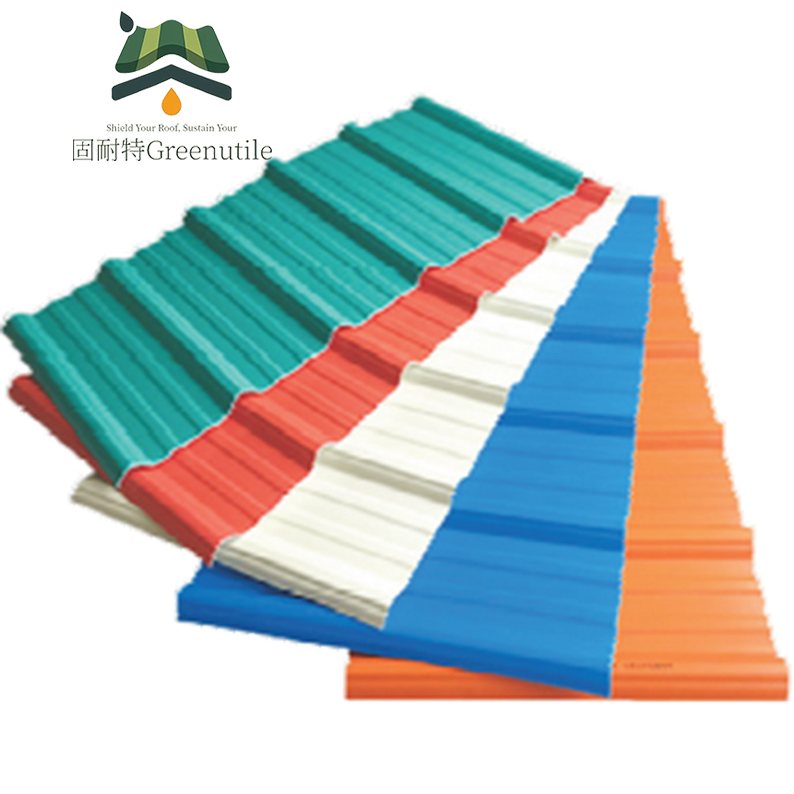
The solution: Deep Wave APVC (210mm pitch, 26mm height) – engineered for North American low-slope warehouses
Our APVC Anti-Corrosion Tiles for Warehouse feature a deep wave profile that drains water 3x faster than shallow wave products. These Waterproof Plastic APvc Roof Sheets for Warehouse also serve as Plastic Apvc Corrugated Roof Tiles Sheet Building solutions for large-span industrial structures.
SIZE:
| Parameter |
Specification |
| Wave Distance (Pitch) |
210mm |
| Wave Height |
26mm |
| Total Width |
1130mm |
| Effective Coverage Width |
1060mm |
| Thickness Options |
1.5mm, 1.8mm, 2.0mm, 2.5mm, 3.0mm (custom) |
Chicago Distribution Center – Low-slope roof (5°) with ponding problems
Local pain point: 50,000m² distribution center – shallow wave PVC roof (16mm height) – water ponds for 3-5 days after every storm. 15-20 active leaks during spring rains – $30,000 damage to cardboard inventory. Algae growth – maintenance crew refuses to walk on slippery roof.
Product advantage: Deep wave 26mm height – drains 3x faster – ponds clear in 8 hours. Zero standing water = zero leaks, zero algae. 2.0mm thickness – withstands foot traffic for maintenance.
Quantitative data: 0 leaks after 18 months. 0 algae growth. $30,000 annual inventory damage eliminated.
Localized Case Study & Data
Client
Coastal Agri-Storage Co., based in Kerala, India (monsoon zone – receives 3,000mm+ annual rainfall).
Challenge
50,000m² distribution center storing paper goods (cardboard, office supplies). Original roof: shallow wave PVC (16mm height, 100mm pitch). The 5° slope was too low for adequate drainage.
Problems with shallow wave PVC on low-slope roof
Ponding water 1-2″ of water sat in wave troughs for 3-5 days after each rain
Leaks Ponding water found micro-cracks – 18-22 active leak points
Algae growth Green algae covered 40% of roof surface
Maintenance cost Patching leaks, algae cleaning annually
Building appearance Green algae stains + patchy gray faded areas
Insurance inspection Standing water noted as risk factor
Our Solution
Supplied our APVC Anti-Corrosion Tiles – deep wave (210mm pitch, 26mm height), 2.0mm thickness, white color – for full re-roofing. 50,000m² total. Purlin spacing increased from 800mm to 1,000mm – 20% fewer purlins.
FAQ
Q1: Why does wave depth matter – can’t I just use shallow wave on low-slope roofs?
A: Shallow wave (16-18mm height) on 5° slope drains very slowly – water ponds for 3-5 days. This causes leaks, algae, extra structural load. Our deep wave (26mm height) drains 3x faster – ponds clear in 8 hours. For low-slope warehouses (5-15°), deep wave is the correct product. Shallow wave is for steeper residential roofs (20°+).
Q2: How much can I save on structural steel with wider purlin spacing?
A: Shallow wave maximum purlin spacing: 800-900mm. Our deep wave: 900-1100mm. At 1,000mm spacing, you need 20% fewer purlins = 15% less structural steel cost. For a 50m x 100m warehouse (5,000m²), that’s $12,000-18,000 saved.
Q3: Will this handle heavy snow loads (Canada, Minnesota, Maine)?
A: Yes. 3.0mm thickness tested to 250 kg/m² (51 psf) – withstands record 1.2m snow. 150 freeze-thaw cycles (-30°C to +20°C) – 0 cracks. Deeper waves shed melting snow faster than shallow wave – reduces ice dam risk.