
Product
Product
Supplier
Search
Get Quote
730 people are quoting

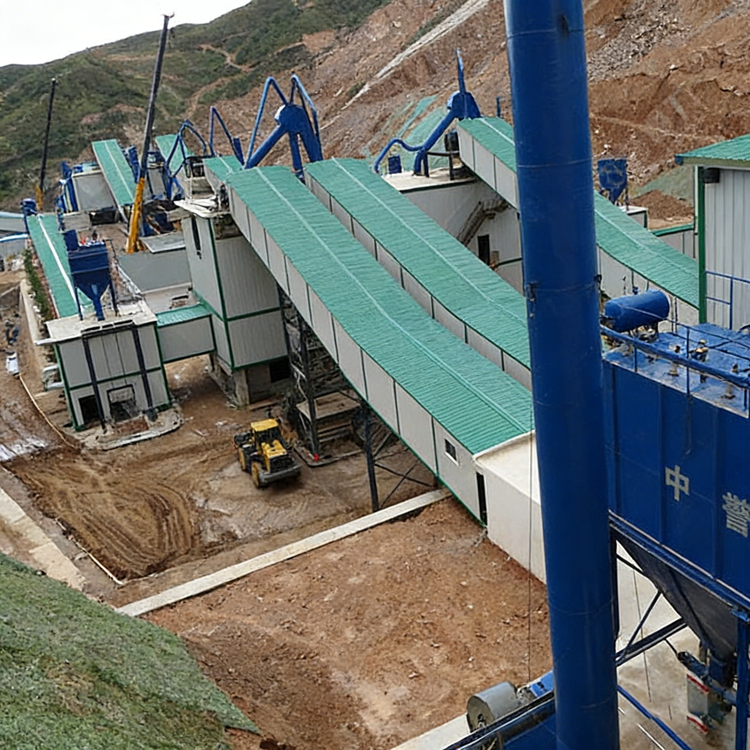
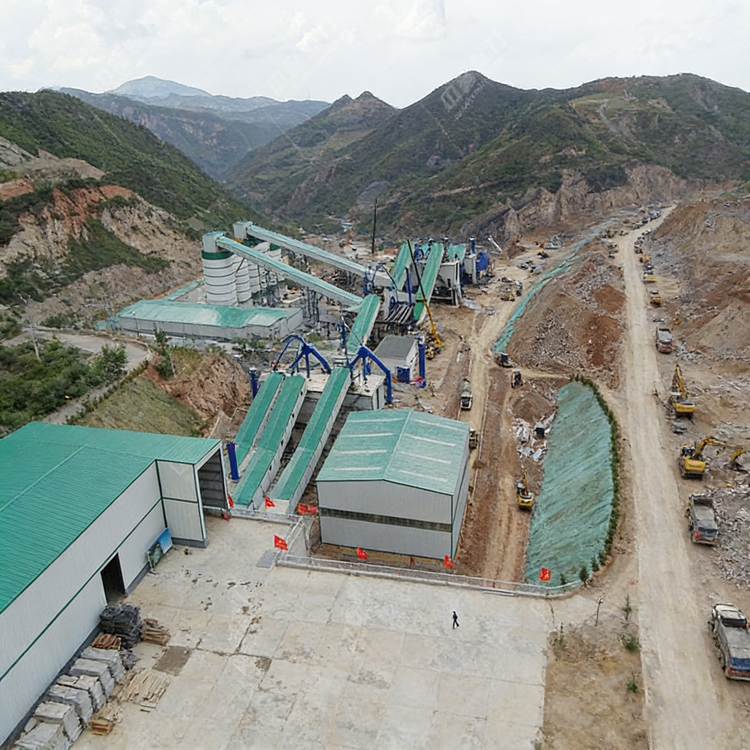
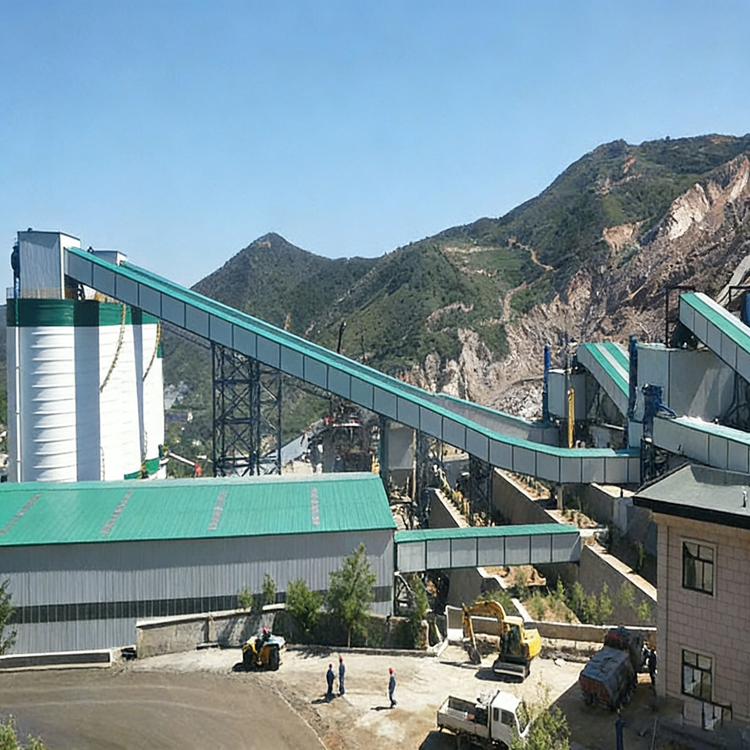
The production line is configured with a vibrating feeder for steady raw material delivery, a heavy hammer crusher for primary coarse crushing, a shaping crusher for particle form refinement, vibrating screens for multi-deck classification, a sand making machine for manufactured sand production, and belt conveyors connecting all stages through fully sealed assembled corridors. The heavy hammer crusher and shaping crusher work together in a two-stage crushing and shaping workflow optimized for limestone, producing crushed stone with excellent particle shape and uniform gradation. The sand making machine processes finer fractions into high-quality manufactured sand, expanding the product range beyond traditional aggregates. All conveying corridors are connected with vibrating screens in a fully sealed structure, realizing dust-free operation throughout the entire production process — from crushing through screening, sand making, and product discharge. Dust collectors and other environmental protection devices are installed at key generation points, ensuring the working site remains dust-free, energy-saving, and eco-friendly. The whole line features low energy consumption and low investment, with all equipment supplied by Zhongyu Dingli and the entire plant independently designed and constructed by the company as EPC general contractor.
| Item | Specification |
|---|---|
| Processed Material | Limestone |
| Annual Output | 4 million tons |
| Primary Crusher | Heavy hammer crusher |
| Shaping Equipment | Shaping crusher |
| Sand Making Equipment | Sand making machine |
| Screening Equipment | Vibrating screen |
| Feeding Equipment | Feeder |
| Material Handling | Belt conveyor (fully sealed assembled corridors) |
| Dust Control | Dust collectors and environmental protection devices |
| Finished Products | Crushed stone, manufactured sand, stone powder, cement, construction materials |
| Downstream Applications | Lime production, concrete production, standard brick production |
| Market Supply | Road construction, commercial concrete batching plants |
| Production Type | Automated, fully closed, dust-free, eco-friendly |
| Project Type | EPC general contractor |
| Design & Construction | Zhongyu Dingli (all equipment supplied) |
Raw limestone is fed by the vibrating feeder into the heavy hammer crusher for primary coarse crushing, achieving efficient high-throughput size reduction in a single pass. The crushed material then enters the shaping crusher for particle form refinement, rounding edges and enforcing uniform gradation to produce crushed stone with excellent particle shape. Shaped output is conveyed to vibrating screens for multi-deck classification, separating finished aggregates into various size grades. Finer fractions are directed to the sand making machine for manufactured sand production, where progressive impact actions produce high-quality fine aggregate with controlled gradation. The finished aggregates serve dual purposes: part is supplied directly to road construction, commercial concrete batching plants, and other industries, while part is directed to downstream processing facilities for manufactured sand, lime, cement, and standard brick production. This integration of stone production and downstream processing represents a reasonable extension of the industrial chain, creating broad market prospects and diversified revenue streams. All conveying corridors are fully sealed and connected with vibrating screens, preventing dust dispersion throughout the entire material handling process. Dust collectors and environmental protection devices operate at all key generation points, achieving extremely low dust pollution during crushing, screening, and conveying — realizing a dust-free, energy-saving, and eco-friendly working site that meets the highest environmental protection standards.
Q1: How does this production line integrate stone production with downstream processing for lime, concrete, and bricks?
The production line operates in two integrated stages. First, raw limestone is crushed into aggregates of various sizes — crushed stone, manufactured sand, and stone powder. These finished aggregates are then split into two distribution channels: part is sold directly to road construction projects and commercial concrete batching plants, while part is directed to downstream processing facilities within the same industrial complex. There, aggregates serve as raw materials for lime kiln production, concrete batching operations, and standard brick manufacturing. This integration represents a reasonable extension of the industrial chain — transforming a single-product aggregate line into a multi-product manufacturing hub that captures value at every processing stage and creates broad market prospects across the building materials sector.
Q2: What makes the fully sealed corridor system effective for dust-free operation in this limestone plant?
All conveying corridors between equipment stages are constructed as fully sealed structures, directly connected with vibrating screens at every transfer point. This enclosed design prevents fine limestone dust from escaping into the surrounding environment during material transport between the crusher, shaping machine, vibrating screens, sand making machine, and product discharge stations. Combined with dedicated dust collectors installed at key generation points — crusher discharge, screen decks, and conveyor junctions — the sealed corridor system captures dust at the source and contains it within the closed conveying infrastructure. The result is extremely low dust pollution across the entire crushing, screening, and conveying process, achieving a dust-free working site that exceeds environmental protection performance requirements for large-scale limestone production.
Q3: What economic advantages does this automated EPC limestone production line offer compared to traditional configurations?
Three key advantages differentiate this line from traditional limestone processing plants. First, the automated operation reduces labor costs and ensures consistent product quality across continuous production. Second, the fully sealed corridor and integrated dust control system eliminates the need for separate environmental remediation infrastructure, reducing both capital investment and ongoing compliance costs. Third, the downstream processing integration — supplying raw materials for lime, concrete, and brick production from the same production line — diversifies revenue streams and captures value at multiple industrial chain stages. Combined with the low energy consumption design and Zhongyu Dingli's EPC general contracting model that ensures predictable investment and timeline control, the total economic return significantly exceeds what a standalone aggregate production line can deliver.

If you are interested in the product, contact 2bvideo.com for more information for more information
The information of 2bvideo.com limited shown above is provided by the user or collected on the network. Video 2B does not guarantee the authenticity,accuracy and legitimacy of 2bvideo.com limited information. Video 2B does not involve legal relationships and disputes between users arising from transactions other than secured transactions on this website. Disputes shall be settled by you through negotiation. If you are the person in charge or relevant employee of this enterprise, if you find that the enterprise information is incorrect or want to manage thiscompany, please contact us jacklee1558@gmail.com, after you claim the enterprise, you can obtain management permission, publish supplyand demand information, bring consulting orders, and remove page advertisements.
Main Product:
Mobile Crusher,
Sand Making Equipment,
Screening Equipment ,
Feeding Equipment,
Mining Conveyor,
Crushing Equipment


