
Product
Product
Supplier
Search
Get Quote
730 people are quoting

Introduction
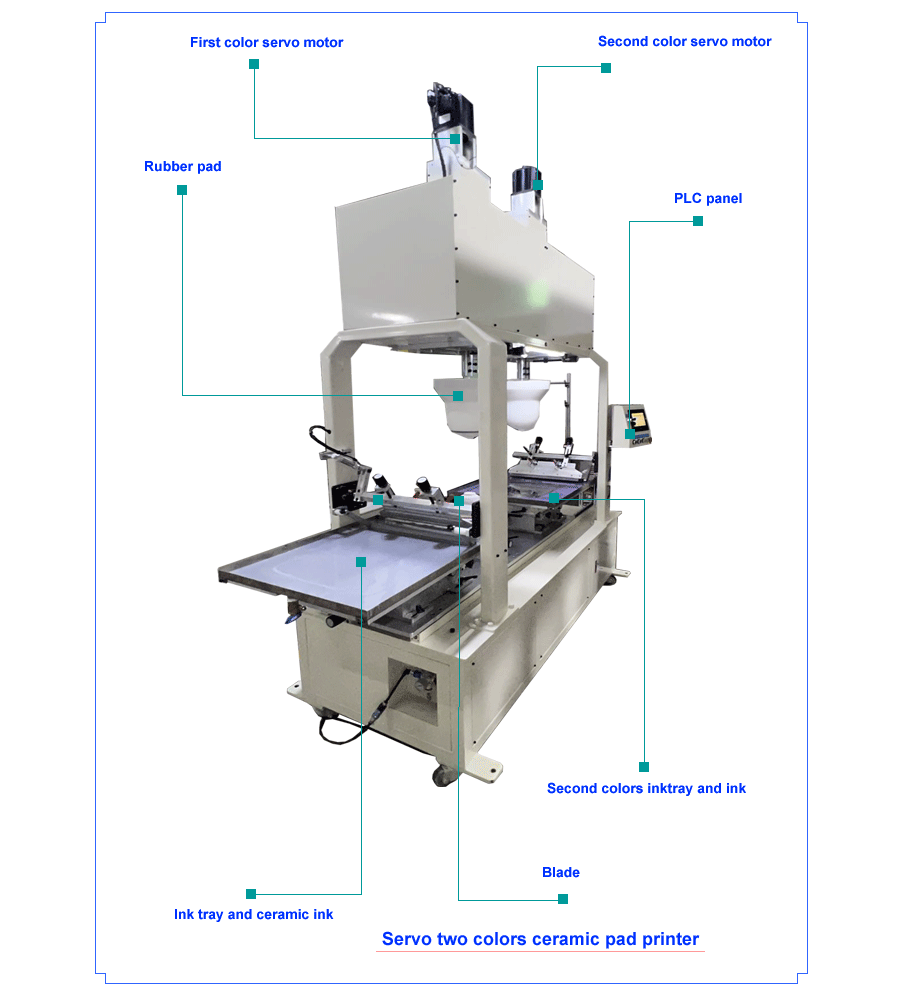
Ceramic pad printing machine is a special large-size pad printing machine specially designed for ceramic materials such as household tableware. Its maximum steel plate can reach 500*700mm. Considering the deformation of the printed product, users should do a good job of testing. At present, ceramic pad printing machines have single-color, two-color, three-color, and four-color. Considering the precision, most of the pressing down action of pad printing head has been controlled by servo motor. In addition to the single-color ceramic pad printer and the two-color ceramic pad printer, which basically use a splicing workbench, the turntable-type pad printer also uses a turntable-type workbench. In addition to the large size and high precision requirements of the ceramic pad printing machine, it is important to control the deformation prediction from the steel plate to the product, which requires the coordination of a special plate maker and printing master.
Compared with ordinary pad printing, ceramic pad printing machine may not show advantages. If it is used to print ordinary products, the cost will be high, but as a mechanized printing process transitioned from ceramic decal paper, it is reducing labor costs. The cost has been greatly reduced.
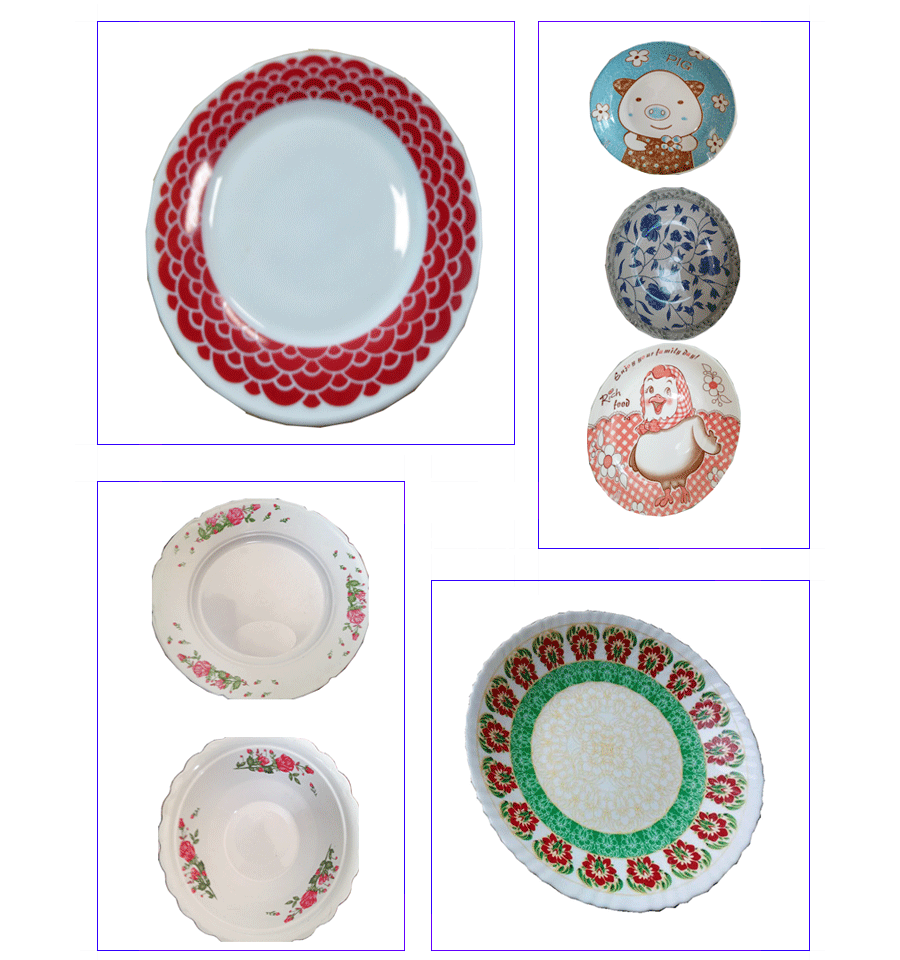
The use of ceramic products in tableware has a long history. In addition to the complete manufacturing technology of human beings, the environmental protection, safety and chemical stability of ceramics themselves have made them dominate in the long history of development. Ceramics are easy to wash and keep clean, have good thermal stability and slow heat transfer, stable and durable chemical properties, very few pores and low water absorption, and colorful painted decorations. In modern family life, bowls, plates, and cups are mostly made of ceramics.
Ceramic tableware is an open vessel with a complex shape. On the one hand, it must be able to hold food or liquid, and on the other hand, it must be placed on the table. The front and back of the food are roughly smooth spherical or concave surfaces. It is difficult to print directly on it. Initially, ceramic decals were used. Ceramic decals were printed by screen printing, and then affixed to the designated parts of the tableware by water transfer printing, and then sintered. The purpose of sintering is to fix the pattern on the tableware on the one hand, and to prevent the ink components from contaminating the food and harming human health on the other hand.
Why are ceramics widely used to make tableware?
The use of ceramics to make tableware is the experience accumulated by mankind for thousands of years. It has the following characteristics:
Strong chemical stability: After high-temperature firing, ceramics have a dense texture and a smooth surface. They do not react chemically with acids, alkalis, oils and other substances in food, and will not release harmful substances. They have extremely high stability.
Good high temperature resistance: Ceramics are made by high-temperature firing and can withstand most temperature ranges encountered in daily life. They can remain unchanged and crack in cooking environments, open flame environments, and closed spaces.
Easy to clean: The surface of ceramics is hard, smooth and delicate, and stains are not easy to penetrate. Wiping, rinsing, disinfection, and steaming will not cause changes in properties, and the safety of the human body is maintained at the highest level.
Easy to decorate: Traditional ceramics can be made into rich patterns and shapes through glazes, paintings, carvings and other processes, which are both practical and decorative. In recent years, with the continuous development of pad printing machine manufacturing technology and pad printing technology, printing using ceramic pad printing machines has made great progress.
Technical Data
|
PKC-202SA Two colors servo pad printer for tableware //Parameter |
||
|
Technical parameters |
|
|
|
Works supply |
|
|
|
H.S.Code |
8443198000 |
CE |
Details
Catalogue
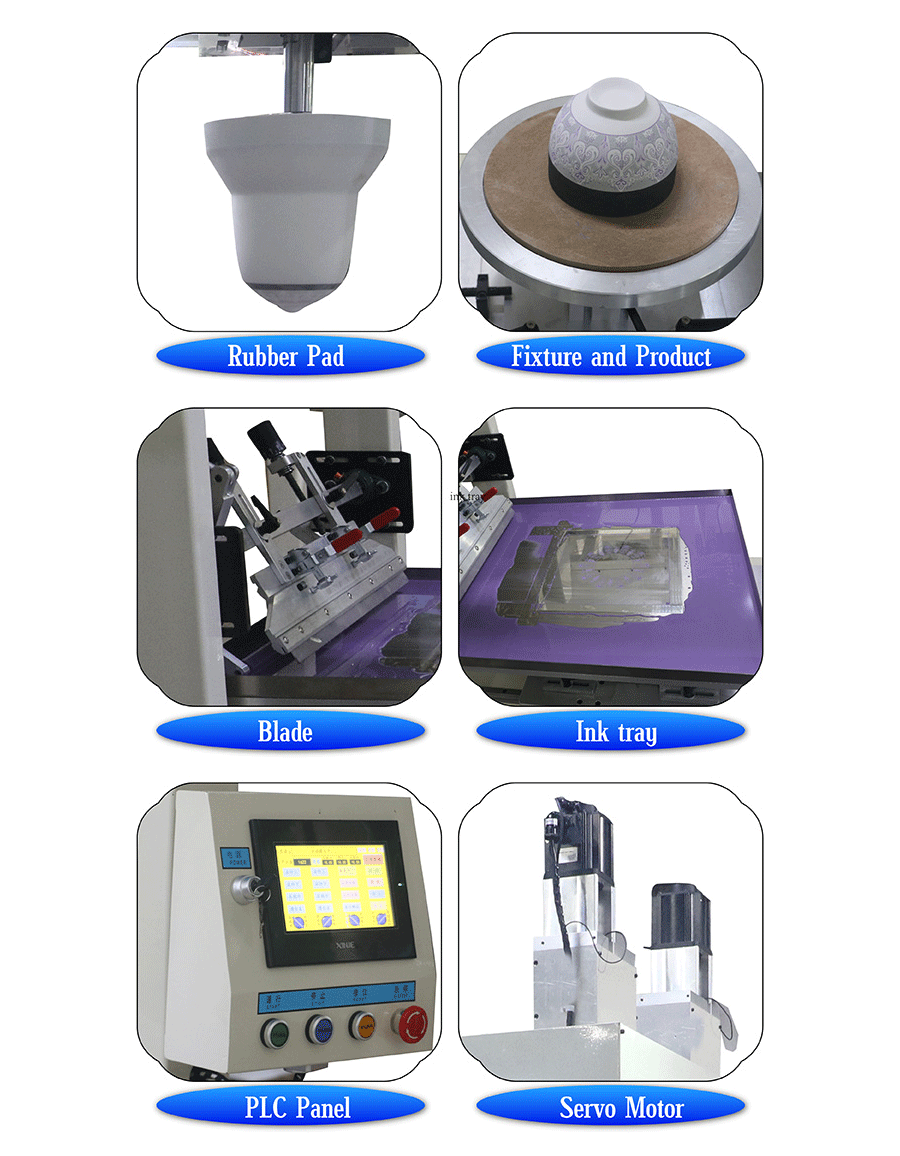
The ceramic pad printer is a large, open-top, dedicated pad printer specifically developed for everyday ceramic products within the pad printing market. It's suitable for complex tableware such as bowls, plates, cups, and teapots. It boasts the largest reported plate sizes on the market (up to 500 x 700 mm). The pad pressure reaches 150 mm or more. Using a very soft or hollow pad, the pad printer offers the ultimate in product shape tolerance.
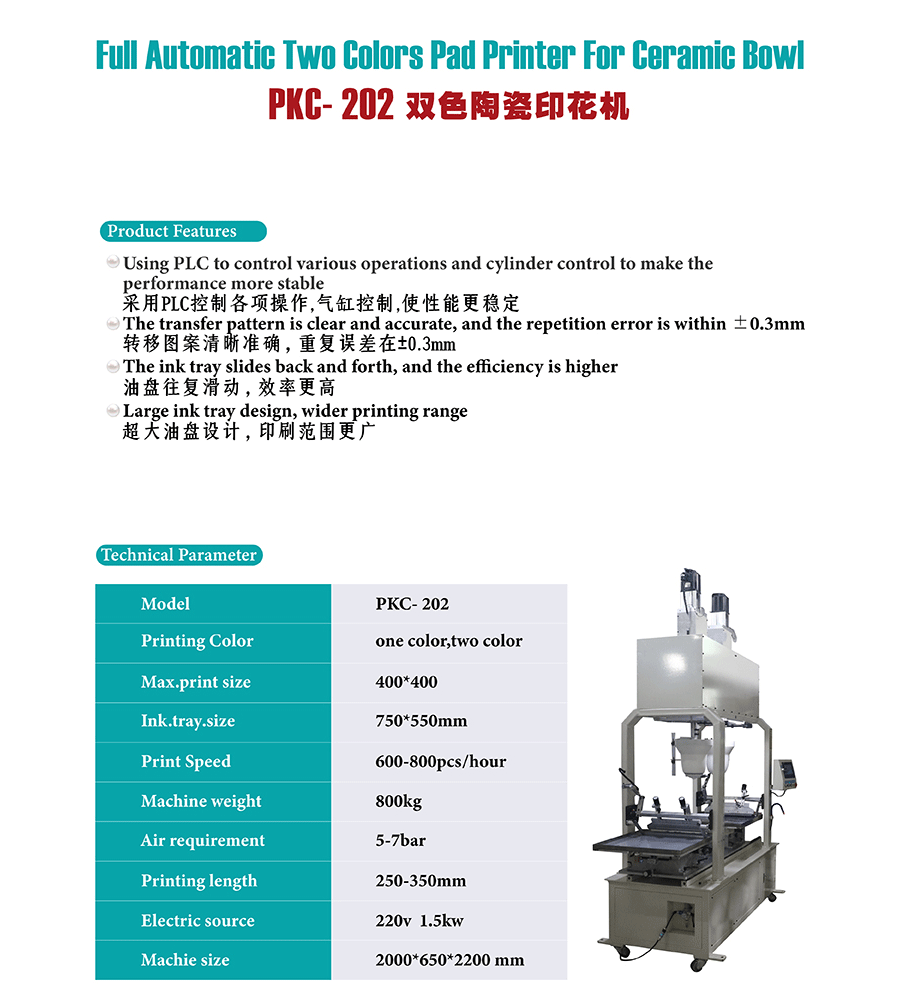
The ceramic pad printer utilizes PLC control and servo cylinder drive. Motion accuracy is digitally configured and managed, resulting in clear and precise transfer patterns with a repeatability of within ±0.8 mm.
It's suitable for products with smooth or uneven surfaces. Ceramic production costs (including pigments and inks) are significantly lower than those of screen printing, hand-spraying, and decals.
Printing area: Applicable range: 50 mm - 350 mm.
Features of ceramic pad printing machine:
The application of pad printing machine to ceramic tableware is a recent phenomenon. The outstanding feature of pad printing machine is that it has a deformable pad printing rubber head, which can adapt to the complex appearance of products, such as bowls, plates, dishes, cups, pots, etc. In order to allow the pad printing rubber head to completely wrap the product, the hardness of the pad printing rubber head is made softer than that of ordinary pad printing machines. When it descends to contact the product, it can deform to the maximum extent for pad printing. In addition, the ceramic pad printing machine also has the following characteristics:

1) Large steel plate size.
Ceramic tableware has a complex shape. When the pattern is transferred from the steel plate to the product, it often undergoes a large deformation and size change. Only when the size of the pattern on the steel plate is large enough can it match the change in the size of the tableware.
2) Large stroke of the embossing cylinder
The rubber head of the ceramic pad printing machine is large, and its printing process is not significantly different from that of the ordinary pad printing machine, but after it is pressed down to contact the product, there must be enough stroke to allow the rubber head to completely wrap the part to be printed, so the ceramic pad printing machine is equipped with a cylinder with a very large up and down stroke. In order to facilitate adjustment, these cylinders are increasingly controlled by servo motors.
3) Adopt open ink supply method
Due to the large size of the steel plate, it is difficult to use the ink supply method of the oil cup, because the manufacture of a huge oil cup will make the structure of the machine more complicated and the cost will increase significantly. At present, ceramic pad printing machines basically adopt an open ink supply structure
4) Mainly use blank pad printing
At present, ceramic pad printing machines are still mainly used for blank plain body combined with water-based glaze for pad printing, and sintering treatment is carried out after printing. It is actually equivalent to the underglaze color process.
If you are interested in the product, contact 2bvideo.com for more information for more information
The information of 2bvideo.com limited shown above is provided by the user or collected on the network. Video 2B does not guarantee the authenticity,accuracy and legitimacy of 2bvideo.com limited information. Video 2B does not involve legal relationships and disputes between users arising from transactions other than secured transactions on this website. Disputes shall be settled by you through negotiation. If you are the person in charge or relevant employee of this enterprise, if you find that the enterprise information is incorrect or want to manage thiscompany, please contact us jacklee1558@gmail.com, after you claim the enterprise, you can obtain management permission, publish supplyand demand information, bring consulting orders, and remove page advertisements.
Main Product:
Automatic Screen Printing machine,
Automatic Pad Printing machine ,
Automatic Hot Stamping Machine,
Pad Printers,
Screen Printers,
Hot Foil Stamping Machines


