
DPC Metallized Substrate: High-Performance Foundation for Advanced Thin Film Circuits
Puwei's Direct Plated Copper (DPC) Metallized Substrate is a precision-crafted ceramic platform engineered to elevate the performance and reliability of high-end thin film circuits. It serves as the ideal foundation for Thick Film Hybrid Microcircuits and RF circuits, combining ultra-smooth surface finish, exceptional thermal management, and superior electrical properties. This substrate is the optimal choice for demanding applications in Microelectronics Packaging, Microwave Applications, and Sensor packaging, where signal integrity, miniaturization, and thermal dissipation are critical for High power microelectronic components and advanced integrated circuit designs.
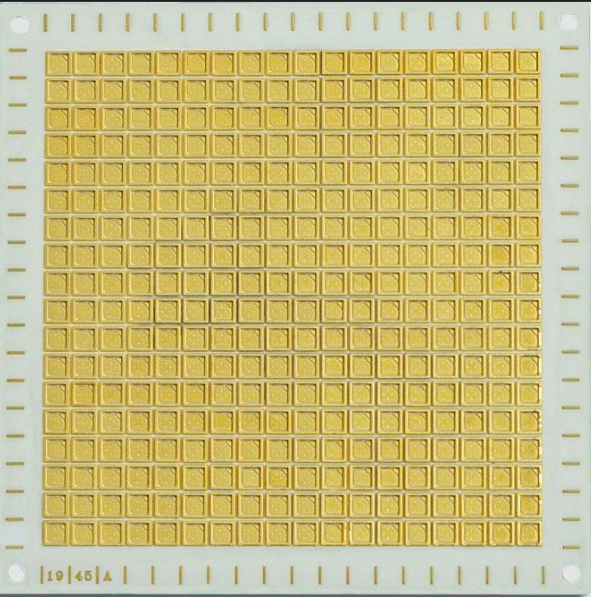
High-precision DPC substrate with fine copper traces, ready for thin film layer deposition.
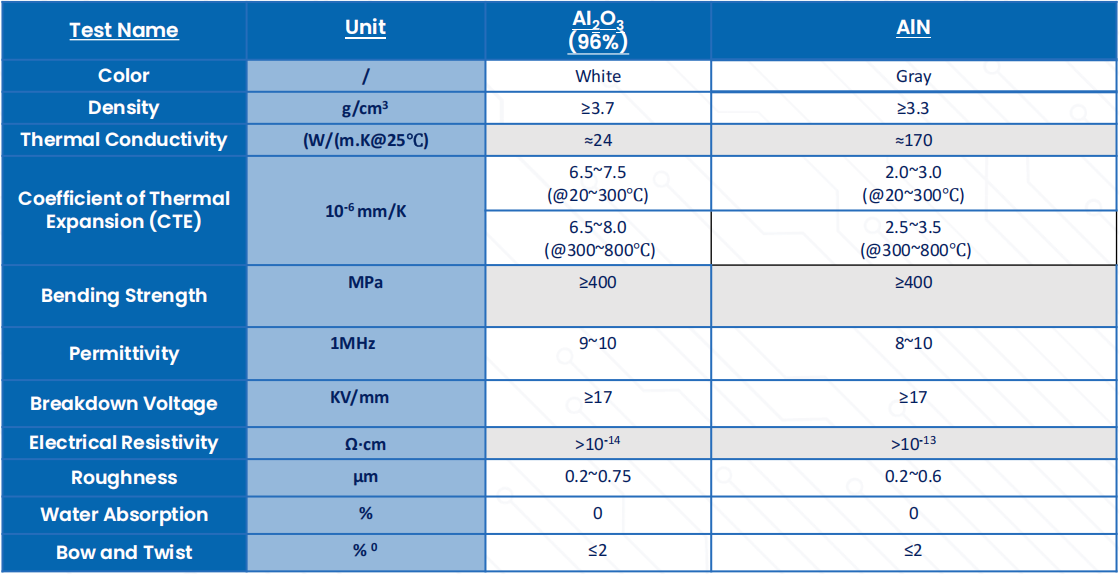
Detailed comparison to guide your material selection for optimal performance and value.
Technical Specifications & Material Options
Base Ceramic Material Options
- Aluminum Nitride (AlN): Thermal Conductivity: 170–230 W/m·K. Dielectric Constant: ~8.8 @ 1MHz. Optimal for high-power, high-frequency use in Power Devices and laser diode packaging. Also available as AlN Ceramic Substrate and High Thermal Conductivity AlN Substrate.
- Alumina (Al₂O₃): A robust and cost-effective standard with excellent electrical insulation properties, ideal for general-purpose Microelectronics applications. Also supplied as Alumina Ceramic Substrate (Al2O3) and Automotive Electronic Ceramic Substrate.
Metallization & Circuit Performance
- Technology: Direct Plated Copper (DPC) with advanced photolithography
- Copper Thickness: 10 to 100 μm (customizable based on current requirements)
- Circuit Resolution: Line width/spacing down to 25 μm for high-density hybrid micro circuits
- Surface Roughness: Ra < 0.1 μm (mirror-like finish for thin film deposition)
- Peel Strength: ≥ 8 N/mm ensuring reliable wire bonding and solder joints
- Frequency Range: Suitable for applications up to 40 GHz, ideal for High frequency module and Microwave Components
Key Features & Technological Advantages
Puwei's DPC technology delivers distinct advantages over traditional substrate solutions, enabling next-generation Electronic Packaging designs:
- Unparalleled Surface Quality: The ultra-smooth, mirror-like finish (Ra<0.1µm) is engineered for flawless adhesion and uniform deposition of thin film layers—a prerequisite for high-quality Film Resistor Element (Metal Film Plating Ceramic Products) and precision conductive paths.
- Precision Fine-Line Patterning: Achieves trace geometries down to 25µm, enabling high-density circuit designs essential for miniaturized integrated circuit packaging and advanced hybrid micro circuits where space is at a premium.
- Superior Thermal Management: The direct bond of copper to high-thermal-conductivity ceramics like AlN creates an efficient heat spreader, crucial for cooling High power microelectronic components, laser diodes, and IGBT modules. Ideal for High-Power Device Ceramic Substrate and IGBT Ceramic Substrate.
- High-Frequency & RF Readiness: Low-loss ceramic materials combined with precise metallization ensure excellent signal integrity with minimal insertion loss, making it ideal for RF circuits and Microwave Applications up to 40 GHz, including Microwave RF Ceramic Substrate.
- Robust Mechanical Foundation: High peel strength (≥8 N/mm) and exceptional dimensional stability provide a durable base for multi-layer builds and reliable operation under thermal cycling and mechanical stress.
- Excellent Insulation Element Properties: High volume resistivity ensures electrical isolation between circuit layers, critical for complex Thick film hybrid microcircuits and multi-chip modules. Suitable for Electrical Ceramic Insulators.
Integration Process into Your Thin Film Fabrication Workflow
Our DPC substrates are designed to integrate seamlessly with standard thin film manufacturing processes. Follow these steps for optimal results:
- Surface Activation: Upon receipt, perform a light plasma or chemical clean to ensure optimal surface energy for the first thin film layer. This step maximizes adhesion for subsequent depositions.
- Thin Film Deposition: Proceed with your standard sputtering, evaporation, or CVD processes to deposit conductive, resistive, or dielectric films directly onto our prepared ultra-smooth surface.
- Circuit Patterning: Use photolithography and wet/dry etching to define your precise circuit patterns on the deposited thin films. The ultra-flat surface ensures exceptional focus uniformity across the entire substrate.
- Component Assembly: Mount active dies, passive components, or other Bare Ceramic Plates (TO BE USED IN MFG ASSY. OF ELECTRONIC INTEGRATED CIRCUIT) using soldering, conductive epoxy, or wire bonding techniques. The high copper peel strength ensures reliable interconnections.
- Testing & Packaging: Conduct final electrical validation and proceed with encapsulation or hermetic sealing as required by your Sensor packaging or Microelectronics Packaging application.
Primary Application Scenarios
RF & Microwave Communications
Power amplifiers, low-noise amplifiers (LNAs), filters, and antenna modules for telecommunications infrastructure (5G/6G), radar systems, and satellite communications requiring stable performance at GHz frequencies. Supports High-Frequency Microwave Applications and Microwave RF Ceramic Substrate.
High-Power & Automotive Electronics
Substrates for Power Devices, IGBT drivers, DC-DC converters, and engine control units (ECUs) where thermal cycling, vibration resistance, and long-term reliability are paramount. Used in Automotive Electronic Modules and Automotive Electronic Ceramic Substrate.
Aerospace & Defense Electronics
Critical for avionics, radar systems, electronic warfare, and satellite communications equipment demanding high reliability in extreme environments with wide temperature variations.
Medical & Sensor Systems
Used in implantable devices, diagnostic imaging equipment, and high-precision sensors where signal purity, stability, and biocompatibility are non-negotiable. Essential for Sensor packaging and Optical Communication Device Applications.
Advanced Optoelectronics
Serving as a stable platform for laser diode arrays, high-brightness LED packaging, and Optoelectronics Applications in fiber-optic communications. Effectively manages heat while maintaining optical alignment. Suitable for Laser Ceramic Heat Sink and LED Ceramic Substrate.
Quantum Computing & Cryogenic Electronics
The exceptional surface quality and material purity make these substrates suitable for emerging quantum computing applications and cryogenic Microelectronics where signal integrity at ultra-low temperatures is essential.
Value Proposition for Industrial Buyers & Design Engineers
- Increase Manufacturing Yield: Superior surface quality (Ra<0.1µm) reduces thin film defects, directly improving production success rate and reducing material waste in high-value Thick Film Printed Circuit and Thick Film Hybrid Microcircuit production.
- Enable Next-Generation Designs: Fine-line capability (25µm line/space) allows for greater circuit density and miniaturization, giving your products a competitive edge in markets demanding smaller form factors.
- Enhance End-Product Reliability: Excellent thermal and mechanical properties lead to longer operational lifespans, reduced field failures, and lower warranty costs.
- Simplify System Architecture: Outstanding inherent thermal conductivity (up to 230 W/m·K) can reduce or eliminate the need for complex secondary cooling systems, lowering overall system cost, weight, and size.
- Accelerate Time-to-Market: Our engineering team provides comprehensive design support and rapid prototyping services, helping you validate designs quickly and move to volume production with confidence.
Manufacturing Process & Quality Assurance
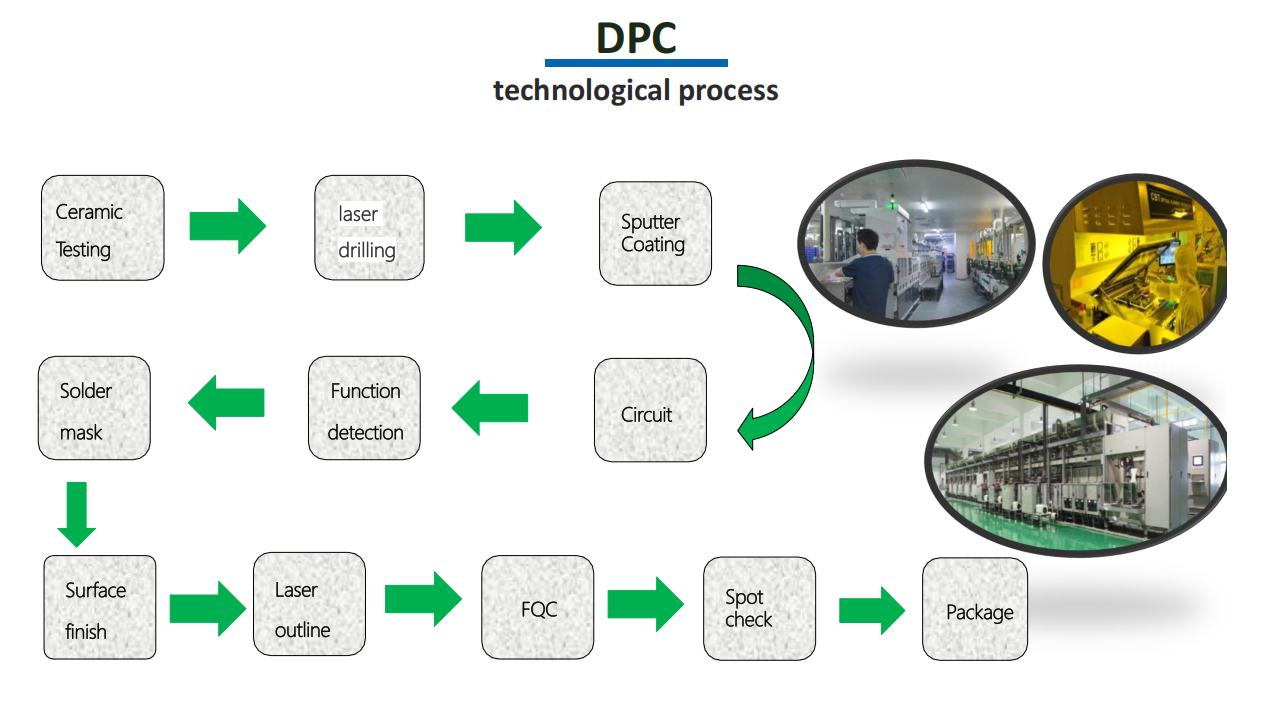
Our controlled, step-by-step manufacturing process ensures precision and reliability for CERAMIC COMPONENTS.
- Ceramic Substrate Preparation: High-purity ceramic blanks (AlN or Al₂O₃) are precision ground and polished to achieve the required surface finish (Ra<0.1µm) for optimal thin film adhesion.
- Seed Layer Deposition: A thin, uniform adhesion layer (Ti/Cu) is applied via magnetron sputtering, ensuring excellent bonding between the ceramic and subsequent copper layers.
- Photolithography & Patterned Copper Plating: Photoresist is applied and patterned using UV exposure. Copper is then electroplated to precise thicknesses through the mask, defining your custom circuit pattern.
- Resist Strip & Seed Layer Etch: The photoresist is removed, and the exposed seed layer is chemically etched away, leaving only the precision-plated copper circuitry.
- Surface Finish Application: Optional surface finishes (ENIG, immersion silver, OSP) are applied based on customer requirements for wire bonding or soldering.
- Comprehensive Quality Control: Each substrate undergoes 100% electrical testing, automated optical inspection (AOI), and dimensional verification before shipment. Statistical process control (SPC) ensures batch-to-batch consistency.
This meticulous process, informed by our extensive experience in producing Electronic Packaging solutions for global markets, guarantees a substrate that performs as promised in your most demanding thin film applications. We also offer Thermoelectric semiconductor module plate, CERAMIC CHIPS, and Thermoelectric cooling assemblies for related thermal management needs.
Certifications and Compliance
Puwei maintains ISO 9001:2015 certification for quality management systems. Our DPC substrates comply with RoHS and REACH directives. Each production batch is accompanied by a Certificate of Conformance (CoC) and full material traceability documentation. For specialized applications, we can provide additional testing reports including thermal cycling, high-temperature storage, and dielectric strength verification.
Customization Options
We offer comprehensive customization to meet your specific design requirements:
- Dimensions: Custom panel sizes and thicknesses (AlN or Al₂O₃) tailored to your assembly fixtures.
- Copper Thickness: 10–100 μm to match current-carrying capacity.
- Circuit Pattern: Fully customized fine-line geometries down to 25 μm line/space.
- Surface Finish: ENIG, immersion silver, OSP, or bare copper as required.
- Material Grade: High-purity AlN for maximum thermal performance or cost-effective Al₂O₃ for general-purpose use.
- Special Features: Cavities, step edges, and via holes for advanced packaging. Also available: AlN Ceramic Circuit Board, AlN Ceramic Copper Clad Substrate, and High Thermal Conductivity Ceramic Substrate.