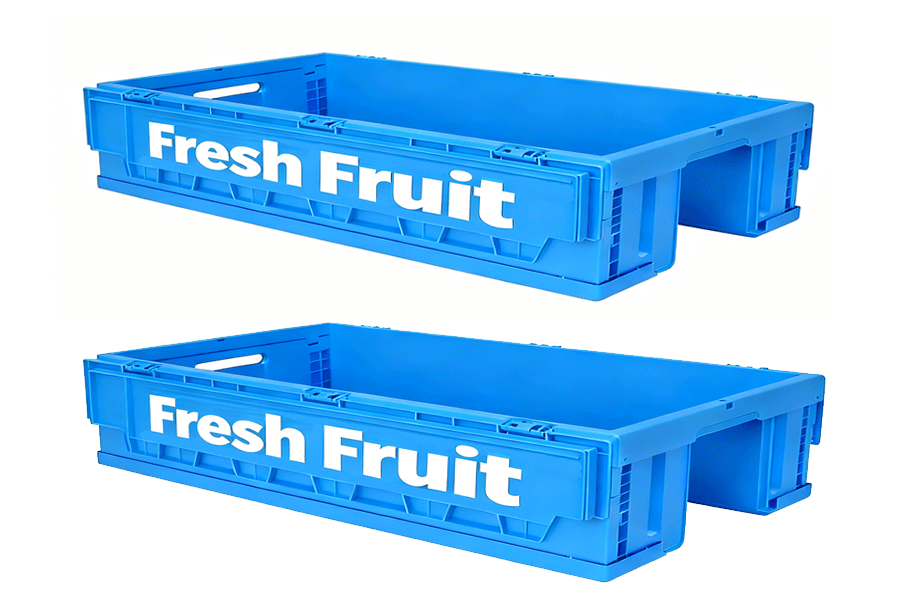
Sealed Cup Pad Printing Machine for Plastic Crates
The Sealed Cup Pad Printing Machine for Plastic Crates is an efficient and more environmentally friendly pad printing solution that uses a sealed ink cup to contain the printing ink and reduce ink exposure during operation. Compared with conventional open-ink-tray pad printers, the sealed ink cup system provides cleaner ink management and helps reduce ink evaporation and unnecessary ink consumption. However, the size of the sealed ink cup also determines the available printing area, making this configuration more suitable for specific printing applications. The ink cup movement direction is another important factor affecting the maximum printing length. Conventional pad printers typically use a forward-and-backward moving ink cup, which is suitable for many standard printing applications but can be limited when printing long graphics. For elongated products such as plastic crates, a left-to-right moving ink cup pad printer can provide significant advantages.
- More compact machine layout: The machine width can be reduced, making the equipment more compact and easier to operate and adjust.
- Longer printing capability: When the ink cup moves horizontally, a longer steel plate can be used, allowing significantly longer graphics, logos, and text to be printed on the product surface.
- Easier operation and maintenance: The ink cup and steel plate are positioned closer to the operator, making ink replacement, steel plate changing, cleaning, and routine adjustments more convenient and efficient.
This configuration makes the machine particularly suitable for plastic crate logo printing and other long-pattern pad printing applications where a compact structure, extended printing length, and convenient operation are important.
Applications of High-Precision Sealed Cup Pad Printing Machines
- Packaging and Labeling Industry: High-precision sealed cup pad printing machines can print logos, text, and graphics on various packaging components and labeling products, providing clear and consistent product identification and brand decoration.
- Electronics Industry: The machine can be used to print logos, technical markings, warning symbols, and identification codes on electronic housings, components, and other suitable surfaces, supporting product identification and traceability.
- Automotive and Aerospace Industries: Suitable for printing component identification, part numbers, technical markings, and other functional graphics on automotive and aerospace components, helping maintain consistent and durable product markings.
- Household Chemicals and Cosmetics Industry: The machine is suitable for printing logos, product information, decorative graphics, and identification marks on cosmetic packaging, personal-care containers, and household chemical products.
- Other Applications: High-precision sealed cup pad printers are also widely applicable to toys, stationery, household products, promotional items, and plastic components, providing efficient and consistent surface printing for a wide range of products.
Machine description
|
P1-620C One color crate pad printing machine with lateral movement cup //Structure
|
|
Working table
|
Standard working table with 3-size adjustment
|
|
Ink supply system
|
Closed -type system
|
|
Plate type and size
|
0.3mm Thin steel plate. Size :150*500mm.
|
|
Pad dropping control
|
Simple-cylinder , simultaneously pressing
|
|
P1-620C One color crate pad printer //Parameter
|
|
Technical parameters
|
- Max. steel plate: 150 ×500mm;
- Ink cup size: Ф135mm;
- Max. printing area :130×350 mm ;
- Printable color quantity:1;
- Max. printing speed: 1000 pcs/h;
- Table size: 165*500mm
|
|
Works supply
|
- 110V-220VPower supply;
- 5-7Bar Compress air;
|
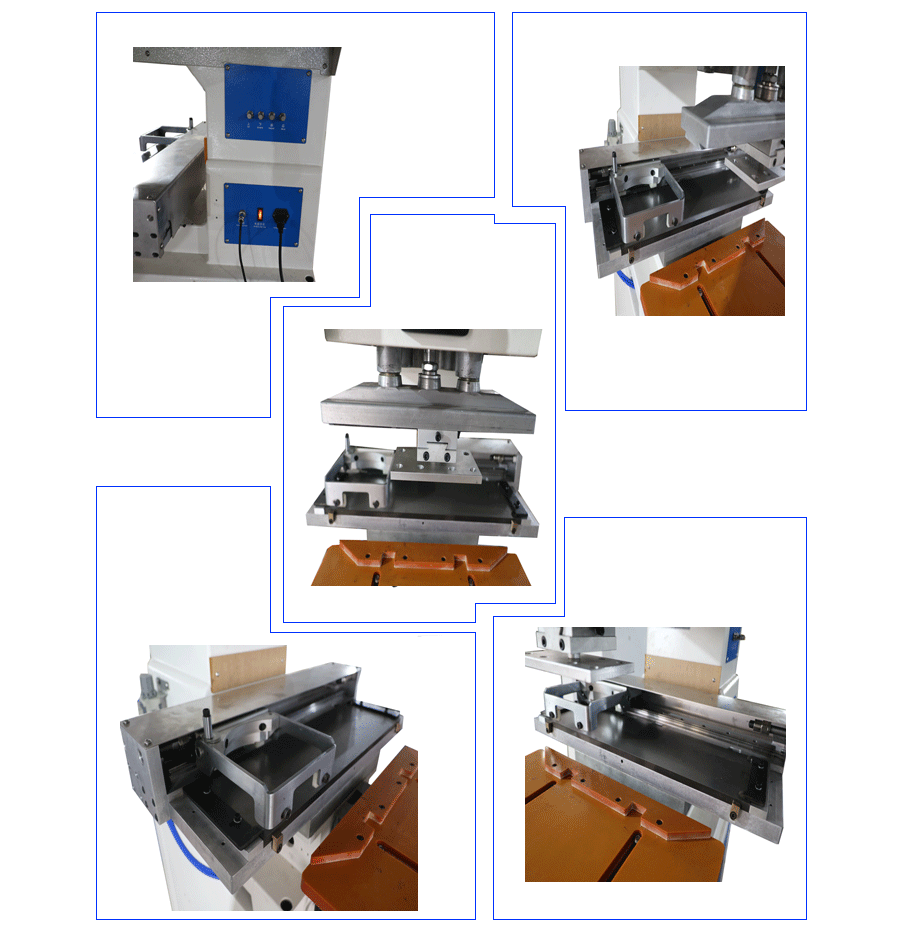
Details-function
- Right-to-left sealed ink cup movement is designed for printing long products and provides extended printing length compared with conventional front-to-back ink cup configurations;
- Multi-axis adjustment table allows vertical, horizontal, front-to-back, and rotational adjustments for accurate product positioning and precise printing;
- T-slot worktable design enables quick and convenient installation and adjustment of fixtures and products;
- Microcomputer-controlled operation provides accurate, stable, and reliable machine movement;
- Individual jog/manual control allows each machine function to be adjusted separately during setup. Once adjustment is completed, the machine can switch to automatic operating mode;
- Die-cast aluminum construction provides a lightweight yet rigid machine structure for stable operation;
- Independent rubber pad stroke and speed adjustment allows flexible control of the pad's vertical movement according to different product and printing requirements;
- Sealed ink cup system reduces ink consumption and minimizes ink exposure and VOC emissions, helping maintain a cleaner and more operator-friendly working environment;
- Independently driven doctor blade system provides consistent blade pressure and thorough ink removal from the cliché, contributing to stable ink transfer and print quality;
- Supports both tungsten carbide and ceramic sealing rings, which can be replaced easily to simplify maintenance;
- Automatic ink replenishment function helps prevent ink from drying in the sealed ink cup during temporary machine stoppages, reducing setup time and ink waste;
- High-quality pneumatic components from established manufacturers ensure reliable operation and extended machine service life;
- Hardened and precision-ground guide shafts provide high wear resistance and smooth movement of the rubber pad assembly, supporting long-term printing accuracy.
Characteristics
- High precision: The high-precision sealed ink cup transfer printer is known for its excellent printing accuracy, ensuring the clarity and accuracy of printed patterns or text.
- Sealed Ink Cup: This device adopts a sealed ink cup design, effectively preventing ink evaporation and contamination, while ensuring stable ink supply, improving printing quality and efficiency.
- Stability: The high-precision sealed ink cup transfer printer focuses on stability in its structure and design, and can maintain stable printing effects during long-term continuous printing processes.
- Usability: The device is usually equipped with an intuitive operating interface and simple operation steps, making it easy for operators to get started and reducing the difficulty of operation.
Plastic beer crate pad printing machine
Plastic crate have large dimensions and complex surface conditions. Silk screen printers and hot stamping machines are more commonly used, while pad printing machines are less commonly used. However, pad printing machines are also used in some occasions.
- Small printing area--In order to increase the strength of the plastic frame, a reinforcing rib structure or a mesh structure will be set on the surface. Some recessed areas are small, and it is difficult for the silk screen frame to sink and contact them. Therefore, a pad printing machine is needed. Pad printing machines are good at printing in small areas.
- Uneven printing area--Due to defects in the injection molding process or the shrinkage of the plastic itself, the printing area is not very flat and the screen is difficult to approach. The rubber head of the pad printing machine is soft and can contact the surface of the product through deformation. In this case, a pad printing machine can also be used.
- Scattered printing area--If the area to be printed on the plastic frame is located in different recesses, the silk screen printer cannot print it at all. It can only be achieved by combining a pad printing machine with a shuttle device.
What problems should be paid attention to when printing crates with a pad printing machine?
- Material--Most crates are made of polyolefin materials. Plastics with low surface tension such as polypropylene (PP) and polyethylene (PE) need to be treated with corona and flame in advance to improve ink adhesion.
- Surface condition--The printing area should be as flat as possible to avoid lines or burrs. The surface should be free of mold release agents, dust and other impurities, otherwise it will affect ink adhesion.
- Fixture-- The size of the plastic crate is large. When making the fixture, the printing area should be as close to the printing rubber head as possible. If the printing area is scattered, a pad printer that can move or flip automatically can be made. The pad printer should be a type that scrapes horizontally with an oil cup, which is more convenient.